


What Mixed Rubber Actually Means in Production
Mixed rubber is raw elastomer that has been mechanically combined with fillers, oils, curatives, and other chemical additives until it forms a single, homogeneous compound ready for extrusion, calendering, or molding. The term covers the finished output of the compounding stage, not the raw polymer itself. A bale of natural rubber or a drum of SBR is not yet usable in a factory; it only becomes a workable material once carbon black, silica, plasticizers, antioxidants, accelerators, and sulfur have been dispersed evenly through the polymer matrix on a mixing line.
Buyers searching for mixed rubber are usually looking for one of three things: a supplier of ready compounded stock, guidance on building an in-house mixing line, or a clearer picture of how compound quality is controlled before it reaches downstream processing. This article addresses all three, starting with the mechanics of mixing itself and working through formulation, quality control, common defects, and grade selection.
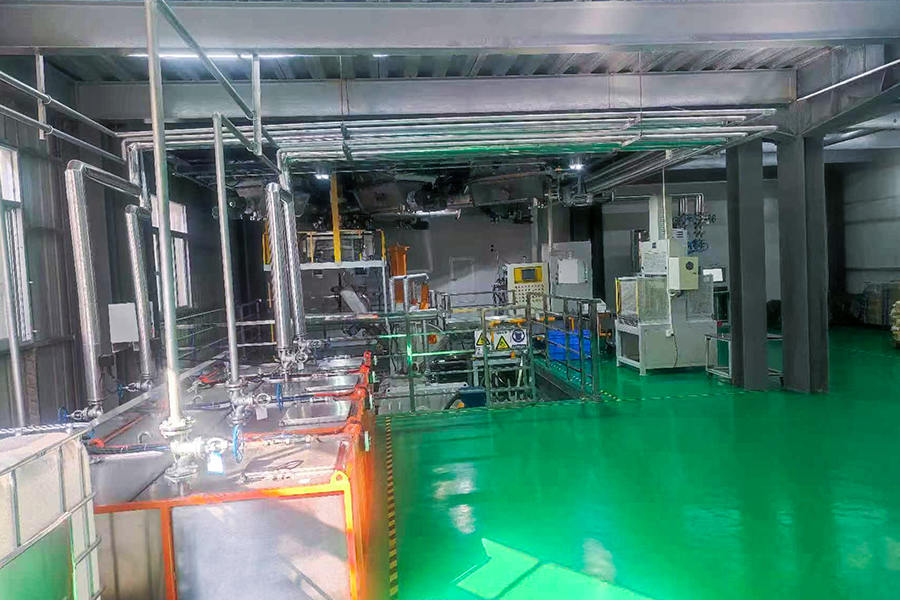
The core piece of equipment behind most mixed rubber production is the rubber mixing mill, sometimes paired with an internal mixer for larger batch runs. Understanding how that machine works is the fastest way to understand why compound quality varies so widely between suppliers.
The Two-Stage Mixing Process Behind Every Batch
Industrial compounding almost never happens in a single pass. Two distinct stages are used because the ingredients added early in the cycle behave very differently from the ones added near the end.
- Masterbatch stage. Raw polymer, reinforcing fillers such as carbon black or silica, process oil, and protective chemicals are combined first, typically in an internal (Banbury-type) mixer. This stage generates high shear and can reach chamber temperatures above 130 to 150 degrees Celsius, which is fine for fillers but would destroy heat-sensitive curatives.
- Final mixing stage. The cooled masterbatch is transferred to an open two-roll rubber mixing mill, where sulfur, accelerators, and activators are folded in at much lower temperatures, usually kept close to 50 to 70 degrees Celsius, to avoid premature vulcanization, commonly called scorch.
Some smaller operations and laboratory batches skip the internal mixer entirely and run the whole cycle on an open mill. This keeps equipment cost down and gives an operator direct visual control over the rolling bank, which is one reason open mills remain common in mid-size factories even though internal mixers dominate high-volume tire and industrial hose production.
For high filler loadings, some formulations are split into two or even three masterbatch passes before the final mix. The general rule is that the more carbon black or silica a formulation carries, the more mixing stages are needed to achieve even dispersion.
Inside a Rubber Mixing Mill: Roll Speed, Friction Ratio, and Nip Control
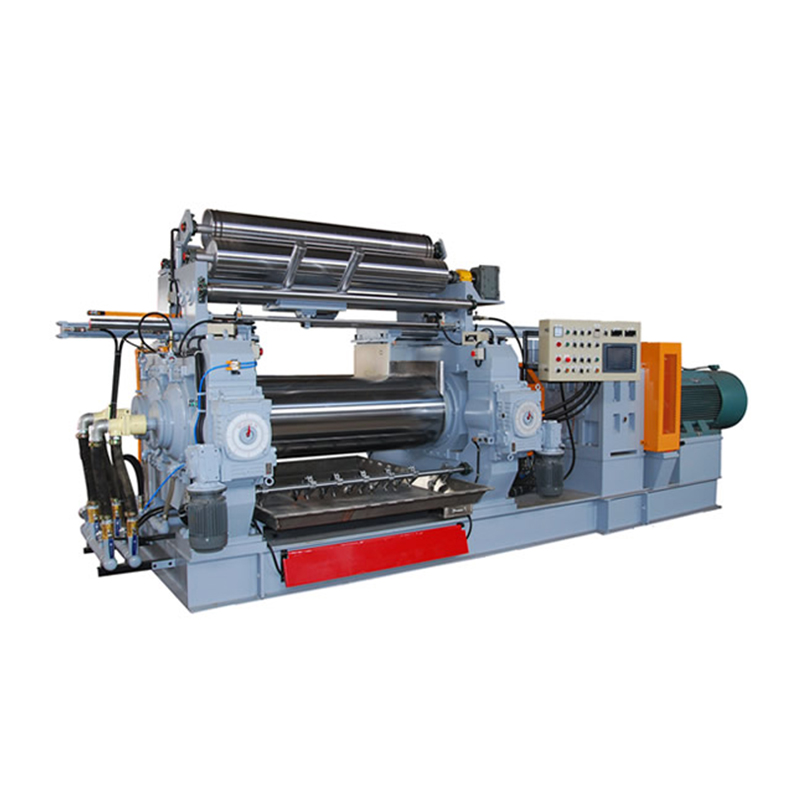
A rubber mixing mill consists of two horizontally mounted, counter-rotating steel rolls. The rolls never turn at exactly the same speed. This deliberate speed mismatch, called the friction ratio, is what actually does the mixing work.
| Parameter | Typical Range | Effect on Mixing |
|---|---|---|
| Friction ratio | 1:1.1 to 1:1.4 | Higher ratio increases shear and heat buildup |
| Roll nip gap | 2 to 20 mm, commonly 2 to 8 mm during mixing | Smaller gap gives more uniform mixing, slower throughput |
| Front roll surface speed | Roughly 16 to 19 m per minute on production mills | Sets the batch cycle time for a given roll length |
| Roll surface temperature | 50 to 70 degrees Celsius during curative addition | Kept low to prevent scorch once sulfur is added |
| Roll hardness | Chilled cast iron, roughly 68 to 75 HRC | Resists wear from abrasive fillers over long service life |
The compound always wraps around the slower, front roll rather than the faster, rear roll. That is a deliberate outcome of the friction ratio, and it is what allows an operator to cut, fold, and re-feed the rolling bank by hand on smaller mills, or through automated cutting blades on larger production lines. Water or oil channels running through the hollow rolls give the operator direct control over stock temperature, which matters more than almost any other variable once curatives are in the batch.
Why the Friction Ratio Cannot Be Set Too High
It is tempting to assume a higher friction ratio always speeds up mixing, but the relationship is not linear once curatives are present. A ratio pushed past roughly 1:1.4 generates enough frictional heat to trigger early crosslinking in sulfur-cured compounds, ruining the batch before it ever reaches the press. Mills built for final mixing therefore often run at the lower end of the range, while masterbatch-stage internal mixers can tolerate more aggressive shear because no curatives are present yet.
Sizing a Rubber Mixing Mill for Your Batch Volume
Buyers evaluating a rubber mixing mill for the first time almost always underestimate how much roll length affects daily output. Batch capacity is not simply a function of roll diameter; it is driven by the working length of the rolls, the bank size an operator can safely maintain in the nip, and how many cut-and-fold cycles the formulation requires before it reaches target dispersion.
As a general planning guide, a small laboratory mill with 150 to 200 mm diameter rolls handles batches in the 1 to 5 kilogram range and is intended for formulation trials rather than production runs. Mid-size mills with 400 to 500 mm rolls, the size most commonly installed in small and mid-tier compounding shops, typically process batches between 20 and 60 kilograms depending on compound density and nip setting. Production mills with 600 mm or larger rolls scale into the hundreds of kilograms per batch and are usually paired with an internal mixer feeding the dump mill directly rather than being loaded by hand.
Overloading a mill beyond its rated batch weight does not just slow the cycle down, it actively hurts dispersion quality, because the rolling bank becomes too large for the nip to fully work through on each pass. Underloading wastes machine time and increases the proportional heat buildup per kilogram of stock, since a smaller bank heats up faster relative to its mass. Matching batch size to the manufacturer's rated capacity, rather than pushing the upper limit on every run, is one of the simplest ways a compounding shop protects both throughput and consistency.
Daily output planning also has to account for changeover time. A shop running several different compound families through the same mill loses real capacity to purging and roll cleaning between batches, particularly when switching from a dark, heavily filled compound to a light-colored or non-black formulation where any carryover contamination is visible immediately.
What Goes Into a Mixed Rubber Compound
Every mixed rubber formulation is built around five functional ingredient groups. The exact ratios shift depending on the target hardness, abrasion resistance, and end application, but the categories themselves are consistent across almost all compound types.
- Base polymer: natural rubber, SBR, EPDM, nitrile, or a blend, chosen for its baseline mechanical and chemical resistance properties.
- Reinforcing fillers: carbon black grades such as N330 or N550, or precipitated silica, added to raise tensile strength and abrasion resistance.
- Process aids and plasticizers: paraffinic or aromatic oils, waxes, and factice, used to improve flow and roll release during mixing.
- Protective additives: antioxidants and antiozonants that slow degradation from heat, oxygen, and ozone exposure over the product's service life.
- Curative package: sulfur, accelerators, and activators such as zinc oxide and stearic acid, responsible for building the crosslinked network during vulcanization.
Filler loading is usually the single biggest driver of hardness and cost. A compound with 30 parts of carbon black per hundred parts of rubber behaves very differently from one loaded at 60 parts, even if the base polymer and curative package are identical. Formulators typically express every ingredient as parts per hundred rubber, written as phr, so batches can be scaled up or down without recalculating ratios from scratch.
How Mixed Rubber Quality Is Verified Before It Leaves the Mill
A compound can look uniform on the roll and still fail downstream if fillers are poorly dispersed or curatives are unevenly distributed. Three checks are standard practice on most mixing lines.
Mooney Viscosity
Mooney viscosity, measured under ASTM D1646, gives a single number that reflects how the compound will flow during extrusion or injection. A batch that reads noticeably outside the target Mooney window usually points to inconsistent mixing time, incorrect nip settings, or a filler dispersion problem rather than a formulation error.
Dispersion Rating
Dispersion is typically graded visually or with image analysis on a cut or torn surface of the mixed sheet. Poorly dispersed carbon black shows up as visible speckling or agglomerates, which weakens tensile strength and increases the risk of surface defects in the finished part.
Cure Rheometry
A moving die rheometer test tracks how quickly and how far the compound cures under heat, producing scorch time and cure time figures. This confirms the curative package was added correctly on the final mill pass and was not exposed to excess heat during mixing.
Reputable compounders retain a sample from every batch and log these three results against a target range before the mixed rubber is released for extrusion, molding, or calendering. Skipping this step is the single most common reason inconsistent batches make it into finished parts.
Common Mixing Defects and What Causes Them
Most quality complaints about mixed rubber trace back to a small set of recurring process errors. The table below lists the ones seen most often on production floors.
| Defect | Likely Cause | Corrective Action |
|---|---|---|
| Scorch or premature cure | Roll temperature too high when curatives added | Lower roll water temperature, reduce friction ratio on final pass |
| Filler speckling | Insufficient mixing passes or nip set too wide | Increase cut-and-fold cycles, tighten nip gap |
| Sticky, non-releasing sheet | Excess process oil or wrong polymer to roll temperature match | Recheck oil phr, adjust roll surface temperature |
| Inconsistent Mooney reading batch to batch | Variable mixing time or operator technique | Standardize cycle time and pass count with written work instructions |
| Bloom or surface discoloration | Additive loading exceeds the polymer's solubility limit | Reduce wax or antioxidant phr, or switch to a higher solubility grade |
Operator Safety Requirements Around a Rubber Mixing Mill
An open two-roll mill presents one of the more serious in-running nip hazards found on a rubber production floor, and safety controls around it are correspondingly strict. In the United States, mills and calenders used in the rubber and plastics industries are governed under regulation 29 CFR 1910.216, which sets out specific hardware and performance requirements rather than leaving guarding to general judgment.
- Pressure-sensitive body bars installed at both the front and back of any mill with a roll height of 46 inches or greater, positioned so body contact triggers an immediate stop.
- Safety trip cables or wire cords mounted within two inches of the vertical plane tangent to the rolls, reachable from anywhere along the operator's working position.
- Defined stopping distance limits. A mill must stop within a travel distance, measured in inches of roll surface, no greater than 1.5 percent of the peripheral no-load surface speed of the rolls in feet per minute.
- Manual reset only. Trip and emergency switches are not permitted to reset automatically; an operator or supervisor must physically reset the control before the mill can restart.
Modern mills add layered protection on top of these baseline mechanical controls. Automatic shutdown systems that monitor for overheating, abnormal vibration, or sudden power loss are increasingly standard on new equipment, and full guarding around the nip point during non-operating periods, such as wash-up, is treated as a separate requirement from the operator's running-position trip controls. None of these systems replace training; the emergency stop devices are reactive by design and only work if an operator recognizes a hazard and reaches the control before contact occurs, so mill operators are trained specifically on hand placement and safe feeding technique rather than relying on the guarding alone.
Maintenance That Keeps Mixed Rubber Quality Consistent
A rubber mixing mill that is mechanically out of specification will produce inconsistent batches even when the formulation and operator technique are correct. Several maintenance items have a direct, measurable effect on compound quality rather than just equipment longevity.
| Component | Check Frequency | Quality Impact if Neglected |
|---|---|---|
| Roll bearing clearance | Monthly on production mills | Uneven nip gap across roll length, inconsistent sheet thickness |
| Roll surface wear and pitting | Visual check each shift, measured quarterly | Poor sheet release, localized dispersion defects |
| Cooling water flow and temperature | Daily | Scorch risk if roll temperature drifts upward during a shift |
| Nip gap calibration | Weekly, or after any roll change | Batch to batch Mooney viscosity drift |
| Drive gear lubrication | Per manufacturer schedule, commonly monthly | Friction ratio instability, increased downtime risk |
Roll surface condition deserves particular attention because it is easy to overlook until a defect shows up in finished parts. Chilled cast iron rolls resist wear well, but abrasive fillers such as high structure carbon black or reinforcing silica still erode the surface finish over years of continuous use. Pitted or scored roll surfaces reduce the compound's ability to form a clean, continuous band, which shows up as an intermittent or streaky sheet even when the formulation and temperature settings are correct.
Choosing Mixed Rubber by Hardness and Application
Compound hardness, measured on the Shore A scale, is one of the fastest ways to narrow down a mixed rubber grade for a given job. It is not the only variable that matters, but it correlates strongly with how a part will perform in service.
- 30 to 45 Shore A: soft seals, gaskets, and vibration damping components where flexibility matters more than abrasion resistance.
- 50 to 65 Shore A: general purpose molded parts, hoses, and conveyor cover stock, balancing flexibility with reasonable wear life.
- 70 to 85 Shore A: high abrasion applications such as tire tread compounds, industrial rollers, and heavy duty flooring.
- 90 Shore A and above: load-bearing bushings, wear pads, and components that need to resist deformation under sustained pressure.
Polymer choice matters just as much as hardness. EPDM based mixed rubber resists weathering and ozone far better than natural rubber, which makes it the default choice for outdoor seals and roofing membrane compounds. Nitrile based compounds are chosen instead whenever the part will contact oils or fuels, since natural rubber and SBR both swell badly in hydrocarbon environments. Matching the base polymer to the operating environment prevents far more field failures than adjusting filler loading ever will.
Blending Reclaimed Rubber Into Mixed Rubber Batches
Not every mixed rubber batch is built from virgin polymer alone. Reclaimed rubber, produced by devulcanizing scrap tire or scrap compound material, is commonly blended into a formulation at anywhere from 5 to 30 percent of the total polymer content, depending on the mechanical property targets of the finished part.
Reclaim lowers raw material cost and reduces the volume of scrap sent to landfill, which has made it increasingly relevant as procurement teams face pressure to document recycled content in their supply chain. The tradeoff is mechanical: reclaimed rubber generally reduces tensile strength, elongation at break, and abrasion resistance compared to an equivalent all-virgin compound, so it tends to appear in lower-stress applications such as floor mats, dock bumpers, mud flaps, and some molded industrial parts rather than in tire tread or high-performance sealing compounds.
On the mixing mill itself, reclaim behaves differently from virgin polymer during the banding stage. It typically requires less mastication time to reach a workable plasticity, since the devulcanization process has already broken down much of the original crosslink network. Formulators working with reclaim blends usually run a shorter initial banding cycle and compensate with a slightly adjusted curative package, since the residual sulfur carried over from the original vulcanizate can otherwise push cure timing off target.
What Actually Drives Mixed Rubber Pricing
Quoted prices for mixed rubber compound vary widely between suppliers, and the spread is rarely about margin alone. Four factors account for most of the difference between a budget compound and a premium one.
Base Polymer Selection
Specialty elastomers such as fluoroelastomer or high-grade nitrile cost several times more per kilogram than natural rubber or general purpose SBR, and this difference flows directly into the finished compound price regardless of how efficiently the batch is mixed.
Filler and Additive Grade
Precipitated silica and specialty coupling agents cost more than standard carbon black grades, and premium antioxidant packages formulated for extended outdoor service life add cost that a basic indoor-use compound does not need to carry.
Batch Consistency Requirements
A compound with tight Mooney viscosity tolerances and full batch traceability documentation costs more to produce than one mixed to a looser specification, because it demands more frequent testing, smaller production runs, and tighter operator discipline on the mill.
Order Volume and Mixing Efficiency
Small trial batches mixed on an underutilized production mill carry a much higher cost per kilogram than a full production run, since setup, purge, and changeover time is spread across far less finished material. Buyers who consolidate orders into fewer, larger batches typically see a meaningfully lower per-kilogram price than those who order small, frequent shipments of the same formulation.
Frequently Asked Questions About Mixed Rubber
What is the difference between mixed rubber and raw rubber?
Raw rubber is the unprocessed polymer, either natural latex derived or synthetic, before any fillers or curatives are added. Mixed rubber is the compounded output after fillers, oils, protective additives, and curatives have been dispersed through that polymer on a mixing line, making it ready for shaping and vulcanization.
Can mixed rubber be produced without an internal mixer?
Yes. Many smaller compounders run the entire cycle on an open rubber mixing mill without an internal mixer, particularly for low volume runs, prototype batches, or specialty compounds where direct visual control of the rolling bank is valuable. Internal mixers become more cost effective as batch volume increases.
Why is sulfur added at the end of the mixing cycle instead of the beginning?
Sulfur and accelerators trigger the crosslinking reaction once enough heat is applied. Adding them early, when the batch may reach temperatures above 130 degrees Celsius during filler dispersion, risks premature vulcanization before the material ever reaches a mold. Curatives are always added on the cooler final mixing pass to avoid this.
How long does a mixed rubber batch stay usable before it must be processed?
This depends heavily on the accelerator system and storage temperature, but many general purpose compounds should be processed within a few days to a couple of weeks of mixing to avoid scorch risk or oxidation. Compounds with delayed action accelerators or those stored in cool, shaded conditions can hold longer.
Does a wider roll nip on the rubber mixing mill speed up production?
It increases throughput but reduces mixing uniformity. A wider nip lets more material pass through per cycle, but with less shear applied to each pass, which typically means more total passes are needed to reach the same dispersion quality, offsetting much of the time saved.
What causes uneven color or texture on a finished mixed rubber sheet?
Uneven color or a mottled texture usually points to incomplete filler dispersion, insufficient cut-and-fold cycles on the mill, or a nip gap set too wide for the batch size. Increasing the number of passes and checking that batch weight matches the mill's rated capacity typically resolves it.
How much reclaimed rubber can go into a mixed rubber batch without hurting performance?
Loadings between 5 and 30 percent of total polymer content are common, with the upper end reserved for lower-stress parts. Above that range, tensile strength and abrasion resistance typically drop enough that the compound is no longer suitable for demanding applications, so the right ceiling depends on what the finished part needs to withstand.
What roll diameter is needed for a production scale rubber mixing mill?
Most production compounding shops run mills with 400 to 600 millimeter diameter rolls. Smaller diameters below that range are generally reserved for laboratory or pilot scale trial batches rather than continuous production output.
Is an internal mixer always better than an open mill for mixing rubber?
Not necessarily. Internal mixers offer higher throughput and larger batch sizes, but open mills give an operator more direct visual and manual control, remain safer for compounds with a short scorch window, and cost significantly less to purchase and maintain, which keeps them common in small and mid-size operations.
What safety equipment is legally required around a production mill?
In the United States, regulation 29 CFR 1910.216 requires pressure sensitive body bars or safety trip cables at both the front and back of the mill, manually resetting emergency switches, and a defined maximum stopping distance based on roll surface speed. Requirements can vary by country, so local regulations should always be confirmed alongside this baseline.
Why do two suppliers quote very different prices for what looks like the same mixed rubber compound?
Price differences usually come down to base polymer grade, filler and additive quality, how tightly the batch consistency is controlled and documented, and order volume relative to the mill's efficient batch size. Two compounds that look identical on a datasheet can still differ meaningfully in raw material grade and testing rigor.

